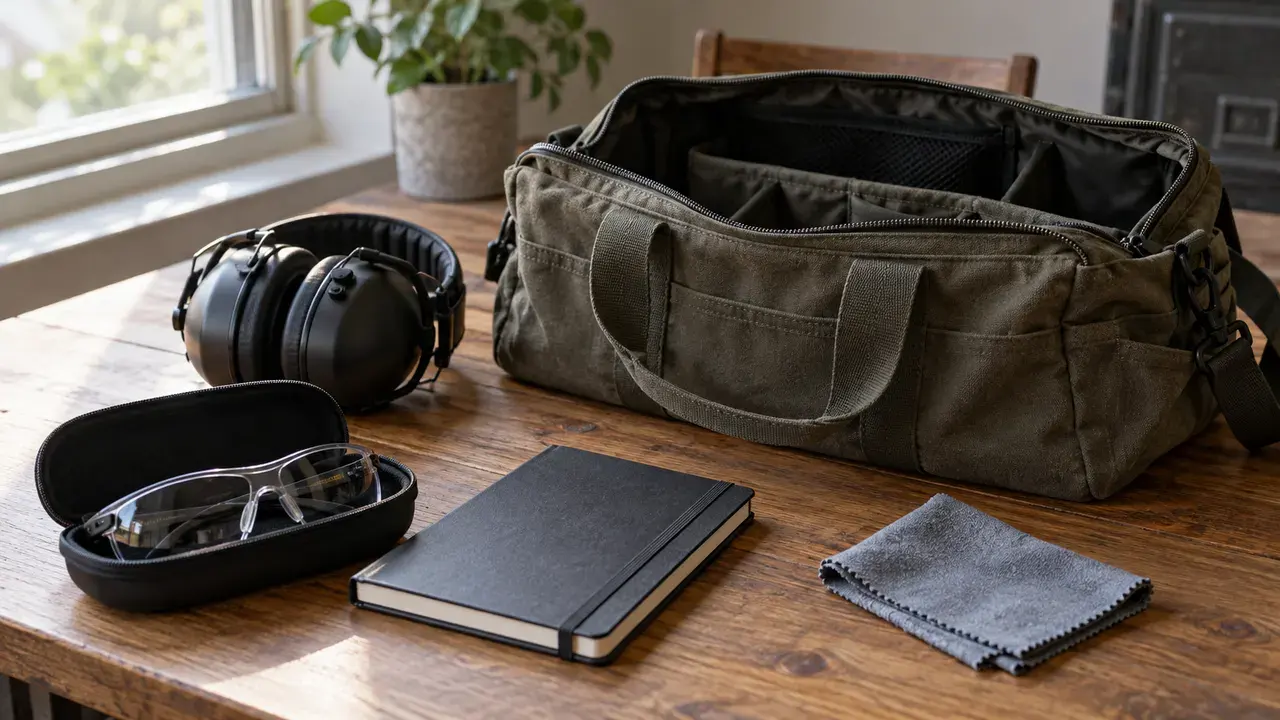
A crumpled receipt, a damp cloth and a pair of glasses floating loose in the bottom of the bag: none of them seems worth dealing with when you get home. By the next visit, though, the glasses are harder to find and the cloth still hasn’t dried. A short reset saves that small scramble.
This is about the ordinary contents of your bag, not firearm cleaning or handling. Complete those responsibilities separately, following your instructor’s directions and the applicable safety requirements. Then give the bag itself a little attention.
Start with the things that should come out
Empty drinks containers and food wrappers first. Put course handouts on a dry surface instead of leaving them folded around a bottle. If you brought a change of clothing, take it out even when it seems dry. A bag that stays zipped in the car tends to become storage by accident.
Choose somewhere suitable for sorting equipment. Follow the range’s hygiene guidance, and keep used range items away from food-preparation areas. There is no need to spread everything across the kitchen table to prove you have been thorough.
Give glasses a proper home
Look at the case as well as the glasses. Grit inside a protective case defeats the point of using one. Follow the manufacturer’s cleaning instructions; the same bottle or wipe is not necessarily suitable for every lens coating.
If something is scratched, damaged or no longer fits properly, make a note before putting it away. Don’t let a questionable item disappear into the bag under the heading of ‘probably fine’. Ask the instructor or supplier what to do about it before relying on it again.
Keep the small spares together
One small pouch is usually easier to search than four pockets. A pen, the equipment instructions and whatever ordinary spares your instructor has recommended can stay together. Label the pouch with something plain. You should be able to find it without remembering a complicated packing system.
The important part is knowing what belongs there. If the pouch keeps getting fuller, empty it occasionally. An old booking confirmation is not a spare, and three dried-out pens are still no use when someone hands you a form.
Write the reminder while you remember
Perhaps the glasses case was awkward to open, or a strap caught on the bag’s zip. Perhaps you meant to ask where next month’s class meets. Put the actual question on paper. ‘Sort equipment’ is easy to ignore; ‘ask whether this case fits in the assigned storage area’ gives you something to act on.
Keep a separate place for course notes. The bag is a convenient way to carry them home, but a poor filing cabinet. Date the handout and keep it with the booking details so it can be found later.
Leave the bag ready, not overfilled
Let suitable cleaned items dry as directed before packing them. Return only the things you expect to use, leaving room for the next day’s water and paperwork. Put anything awaiting repair or advice somewhere clearly separate.
On the morning of your next visit, check the current booking instructions again. The reset takes care of the bag; it doesn’t replace the range’s rules or a last check of what that particular session requires. Ideally, it just means you can find your glasses without emptying every pocket.